Sunday, August 30, 2009

The Tree of Swirl


The Tree of Swirl, originally uploaded by ParsecTraveller.

Whoa! This picture must have been Photoshopped, right?! Wrong - it's all done in camera.

This photo actually shows a tree in my backyard. I got it by zooming in while simultaneous spinning the camera. Pretty cool, huh?

Casa Roma aka Eastbrique Tower

In July .., I posted Home Sweet Home as a contribution to "Smile for the Camera : Celebrate Home" that was hosted by footnoteMaven. In that post, I talked a little about the house I lived in while attending Indiana State University (1979-1982) in Terre Haute, Indiana and included the photo below.


"Eastbrique Tower on Fruitridge Avenue, Terre Haute, Indiana. I lived here 1979-1982. I don't know when the house was built but it was quite old. The owner was remodeling it and turning it into apartments. I lived in a little efficiency apartment located in the left corner, first floor. I was devastated when I returned to Terre Haute in 1985 to discover the house had been torn down and the lot turned into a paved parking area for a neighboring restaurant."

A few days ago I received a comment from Donna Bollman who provided more information about the house:


This is the only picture I have ever seen of the "Casa Roma". I loved this building. My parents had bought the building and my father had brought it back to life. We put countless hours into the restoration of the immense wood throughout the home. In one room the opening of the fireplace exceeded 5' and I could walk into the opening. That room also hosted 20' ceilings and touted solid walnut ceiling beams and the room lead out by way of grand french doors that were arched. Behind this manor house was a carriage house that we were converting to a Art Studio/Antique shop. My father feel ill to lung cancer before it was completed. On the day of my fathers funeral in August in 1994 my mother gave me a box that contained a single brick. It was one of two cornerstone bricks from the building. That is how I found out "The Castle" had been demolished. My mother had the building bulldozed the night before the funeral. She destroyed the building at night because she feared the city would stop her from tearing down the oldest remaining grand home on Fruitridge Ave. The land was then sold on the day of the funeral to the restaurant next door for extra parking.

And, my response:


Donna, thank you for sharing the story of 'The Castle.' I have fond memories of that place. Your father showed me every room before I moved in. Since I was a poor college student, I could only afford the efficiency apartment. I really would have loved to live in one of the larger apartments. The woodwork was amazing and your father (and whomever helped him) did a wonderful job in restoring it.


Was the house demolished in 1994 or 1984? In my post I said I visited Terre Haute in 1985 and the house was gone. I could easily have gotten the year mixed up. I'm sure that had it been publicly known, there would have been an outcry to prevent it being destroyed. I'm amazed that your mother was able to pull that off without it being public knowledge! It's sad that it was torn down. It was a grand old place.


Donna, I have another photo of the house, taken from the other side that actually shows the tower. If you are interested I could post it on the blog or email it to you.


Donaa added another comment late last night:

No my mistake 1984. I would love to have a copy of the picture. To this day I still refinish wood for a living. (I was a fine arts major) The name Casa Roma was what it was called in the 1940's when it was a restaurant. The building itself took years to complete. (1860's to 1870's) The couple that built the house went on an extended stay in Europe. Each room was built one at a time. The wife would sent back ideas from homes that she liked in Europe. Many people think it was added on to but that was the way it was built. They say the wife did not see the home till it was finished and loved it. Also each room was furnished in the style of that room.

I find it interesting that both Donna and I were fine arts majors. My emphasis was in photography but I also took quite a few courses in woodworking while at ISU and loved working with wood.


Most of my older photos (i.e., pre-digital) are in boxes in storage but there were a few that were digitized during the scanning frenzy a few years ago, including the three below.


An infrared photo taken from the southwest side. My apartment was in the lower right corner.


The living room was rather small - I think the ceilings were higher than the width of the apartment!


A fun photo, taken with a very wide angle lens, made the apartment look bigger. The three square windows across the top were stained glass and added some wonderful color to the room in the late afternoon.


My thanks to Donna for taking the time to leave her comments and for providing more information about the house.


Thursday, August 27, 2009

Monday, August 24, 2009

Mendenhall Glacier

Thursday, August 26th - - Mendenhall Glacier, a short drive from downtown Juneau, was first named Auke Glacier in 1879 by John Muir. In 1892 it was renamed to honor Thomas Corwin Mendenhall (1841-1924) who served as Superintendent of the U.S. Coast and Geodetic Survey from 1889 to 1894.

The Mendenhall glacier flows for 12 miles down the Mendenhall Valley to its terminus near the visitor center. The ice flows forward at an average rate of 2 feet per day, but at the very same time, it wastes away at a slightly faster rate. Waste occurs through melting or when large pieces of ice break off the face of the glacier. When the rate of melting exceeds the rate of flow, a glacier recedes. The Mendenhall glacier has been receding since the late 1700's and currently retreats at a rate of 25-30 feet per year.

Mendenhall Glacier as seen from the rear of my campsite at Mendenhall Lake campground in the Tongass National Forest. The full face of the glacier cannot be seen from this vantage point because it is blocked by the bit of land jutting out from the left.

The view from the Visitors Center. We are seeing only a very small portion of the glacier as it extends 12 miles back down the valley.

A little bit closer.
An awesome waterfall flows down from above. Another waterfall can be seen in the far distance to the right of the glacier.

A ride on the lake gets you a little closer to the face of the glacier.
Some of the larger icebergs floating in Mendenhall Lake. Icebergs are created when the glacier calves (chunks of ice fall off the face of the glacier).

I couldn't resist picking up a chunk of glacial ice that was floating close to the shore. It was crystal clear and many, many years old. And it was cold...

Interlude...

Saturday, September 17th - - After leaving Yellowstone National Park I traveled toward the small town in southwest Montana where I stayed for most of July last year. It looks much different here now than it did then – the “hills” are mostly brown providing quite a contrast between the lush, green areas that are irrigated or those along the rivers, which are lined with trees. The weather has been rather nice with lots of sunshine but the skies have mostly been the “hazy-white” variety, which isn't conducive to obtaining “pretty” pictures of the scenery.


I've been here almost two weeks and have been taking advantage of the time to “catch up” on blog reading and writing, a little research (very little), and going through the pictures I've taken this year. Much of my time has been consumed/absorbed with work on the netbook. So much so that I feel like I've been sucked into the vortex of the computer, which is a never-ending cycle!


As mentioned in a previous post, I've been looking for a new camera and hadn't had much luck with finding one in stock. The stores had the ones I was interested in on display but didn't have them available to purchase. I finally gave up going to a “brick and mortar” store and bought one online! I went with the Nikon P500. The other camera that I was looking at was the Canon SX30. They both have similar features but the Nikon just “felt good” in my hands. It arrived a little over a week ago and I've been having some fun playing with it and learning some of its features. It will take some practice to get used to what it can do; it's amazing to me what all they've packed into this thing!


After the camera arrived and it took five hours to charge the battery in the camera, I realized I would need another battery and an external charger. Those were ordered and arrived here on Tuesday. It still takes about 2 ½ hours to charge a battery but that is better than 5 in the camera!


One of the things that I really wish came with the camera is a printed manual, but nowadays that is not likely to happen. The pdf manual comes on a CD and it's easy to find what you are looking for, but it's just a little difficult to look things up when you are “out in the field” using the camera!


So far, I'm quite happy with the camera.


On Passive Transportation


Sometimes I think about the phrase "Active Transportation," as used by cycling and walking advocates. I think about it especially when I find myself on a long distance bus, train or airplane trip, or as a passenger in a car: sitting still, sometimes for hours, as I am propelled through space with no input from my own body or mind. It is at times like these that the notion of active transportation is at its most appealing, because I am experiencing its opposite so keenly. This unnatural stillness as trees and houses flicker in the corner of my eye, this uncomfortable awareness of being carted, transported, delivered is what Passive Transportation feels like to me.


There is a great deal of focus today on encouraging physical activity. Walk more, be more physically active, be healthier. Getting around on foot and by bike are seen as crucial to a more physically active lifestyle. And public transit is included in what active transportation encompasses, because it is typically used in conjunction with walking or cycling. Walk a few blocks to catch the bus or subway, then walk some more to the office. And because there's no car parked at work, walk to and from lunch as well. An increase in physical activity, however small, is the goal.


Comparatively under-addressedare the psychological aspects of active and passive transportation. And here things get a little tricky, because in a lot of people's minds the car wins. When drivers explain why they want to drive and why they enjoy driving, much of it has to do with feelings of independence and control. The association starts early, as suburban American teenagers see their driver's license and their first car as tickets to freedom. The connection only strengthens in adulthood. Driving allows us to actively control our routes, our destinations, our schedule, our speed. Psychologically, this is active transportation.


Except for those instances when it's not - instances that in some parts of the world are becoming ever more frequent, possibly even the norm, and starting to redefine the driving experience. Those who find driving appealing tend to picture the ideal: driving a car along efficient highways or through scenic country roads, arriving at their destination to park directly in front of the entrance. But as many of us know, and quality of life studies are starting to note, this is far from reality today. Traffic controls car travel. In areas where it is heavy, it can slow cars to a crawl, overriding the driver's control over their speed, route selection, and schedule. The difficulties of finding parking, and obligations having to do with city ordinances, create additional restrictions. In an idealised version of the driving experience the driver may be an active agent, but in the real world they are increasingly not only passive but trapped.


Freedom of mobility is important to human beings. There is dignity in being independent, in being in control of one's movements and one's time. We place value in this, and with dignity and independence comes prestige. Modes of transportation perceived as more dignified will carry more prestige than modes that are not, and how the concept of active transportation is framed will play a role in this. Passive transportation users will be receptive to alternatives seen to offer more freedom and control, not just more physical activity.

Wednesday, August 19, 2009

The season is underway... sort of

Hello again winter fanatics. Hope everyone had a great spring, summer and fall. My faithful climbing partner/girlfriend Larua and I have been out dry tool training and scoping things out for the upcoming winter season. Great News... We think we've found the largest concentration of moderate ice climbs in Western PA. As the weather gets better (worsens) we'll be able to tell you more. It could be home to over 20+ WI3 to WI4 routes. We've also been eyeing up some new mixed lines that are begging to be climbed. It should be a good year full of new routes. We've been getting our workout on as much as possible. Laura has come out swinging! getting early season clean ascents of routes most local "dudes" won't even try. The start of things freezing is (hopefully) a few short weeks away. The woods and cliffs are dripping plenty and all the water looks promising for an incredible year. We didn't rock climb a whole lot this summer, but we did keep our tools veryactive during the winter "off" season April-November dry tooling as much as possible.


I figure there is no reason to bore everyone with long tales of my off season activities, so I'll sum it up in a few sentences. I spent the spring and summer running... Mostly trails, but also some pavement running with a few races thrown in for good measure. I managed to do quite well across the disciplines. My true love of running is long distance in the woods for many hours at a time. Below is a photo that Laura took during a HOT summer run. She had it set on our computers wallpaper for most of the season. It shows me in all my glory during a run on the Laurel Highlands Hiking Trail. I usually spend 5 days a week training on this 70 mile point to point trail. Its a short distance from our house to the trail which makes training convenient. On the trail I've adopted the name "woodz ninja" although below I look more like "Salt Pig Sweat Hog" It definately keeps me in shape for winter climbing. Laura spent the majority of the off season hiking a lot and volunteering at Powdermill Nature Reserve in Rector, PA. She helped in the bird banding lab.


Around mile 50 or 60 in 90° humid summer

weatherat one of our "Mobile Aid Stations"
The other hobby I enjoy is hawk watching. Unfamiliar with it? It's more like the counting, study and observing of migrating raptors for scientific purpose. In particular I've been interested in the migration habits and paths of the Golden Eagle through the central Appalachian chain. Every year in mid September I slow climbing "training" and start hawk watching for a few months. This upcoming spring season I am starting the first official hawk watch in Western MD. If you have any interest or would like to learn more check out my blog for the Cumberland Gap Hawk Watch. It'll explain a great deal. If you have any questions please get in touch. As climbers we spend a great deal of time in raptor territory and being able to identify and understand these amazing birds soaring around the crags is well... pretty awesome!


Another recent project I helped with involved former PA ice climber Rob "Griz" Ginieczki author of the 2006 climbing guide titledIce Climbing Pennsylvania. Much has changed in PA climbing since 2006 and it was time for an update. Griz approached me to help with the Southwestern PA section. Personally I can say quite a bit has been added to the SWPA section and should help everyone climb even more ice in our region. The book is in print right now and should be out in time for this season. I'll keep you posted as to when they are available. Great job Griz! Keep the PA ice community stoked and getting after it!


Stay tuned as the winter progresses and the climbing starts to happen. I'll be posting regularly again keeping ya'll updated on the happenings around here. Train on! -Tim

Sunday, August 16, 2009

Tombstone Tuesday :: Perry and Retha Wiseman

Lakeview Cemetery, Larwill, Whitley County, Indiana

WISEMAN
RETHA J. / 1917-1989
PERRY M. / 1906-1968
PERRY M WISEMAN
INDIANA
CPL CO B 17 TANK BN
WORLD WAR II
AUG 3 1906 JULY 6 1968

Photographs taken July 31, ...
Copyright © .. by Rebeckah R. Wiseman
Perry Martin Comfort Wiseman was the first-born child of Elsie Shuder and Charles Wilson Wiseman. My father, Jack William Wiseman, was the youngest of their eight children, born in January 1924.

Uncle Perry's obituary was published in the Warsaw Times Union on July 9, 1968.
Perry M. Wiseman, 61, of Blue Lake, R1 Churubusco, died of complications at 4:30 a.m. today in the St. Joseph Hospital, Fort Wayne, where he had been admitted on Sunday.

Born August 3, 1906 in Tippecanoe Twp., Kosciusko County, Mr. Wiseman was the son of Charles W. and Elsie (Shuder) Wiseman. He spent his formative years in the Barbee Lakes Community and served in the US Army during WWII. On February 6, 1954 he united in marriage with Retha Juanita Wallace who survives. He had been an employee of the Weatherhead Company in Columbia City for several years.

In addition to his widow, he is survived by 3 brothers; Leslie, R2 South Whitley; Emery, R1 Warsaw; Jack, North Webster; and 2 sisters, Mrs. Walter Tobias and Mrs. Carl Conrad, both of Nappanee.

Final rites will be conducted at 2 pm Thursday at the Smith Funeral Home in Columbia City. Rev. Chester Reed will officiate and interment will be in the Lakeview cemetery at Larwill. Friends may call at the funeral home after 2 pm Wednesday.
Aunt Retha's obituary was published May 1, 1989 in the Warsaw Times Union.
Retha J. Wiseman, 72, formerly of 840 Plantation Drive, Columbia City, died in Meadowhaven Nursing Home in Butler, Indiana on Saturday April 29, 1989. She was born January 25, 1917, in Richland Township, Whitley county, to William and Georgia L. Cummins Rindfusz. She married Perry Wiseman, who died July 8, 1968. She was a 1935 graduate of Larwill High School and moved to Columbia City in 1968. She was retired from Dana Weatherhead Division in Columbia City. She was also a member of the Pioneer Club and the Quarter Century Club.

Survivors include one niece, Nedra Budd, Pleasant Lane; one brother-in-law, Wheeler Rager, Pierceton; two great-nephews; and three great-nieces. Two sisters preceded her in death.

Services will be at 2 p.m. Tuesday in Smith & Sons Funeral Home, Columbia City with the Rev. Joseph Smith officiating. Burial will be in Lakeview cemetery, Larwill.

Thursday, August 13, 2009

Assateague Island :: Adieu

It was with some degree of sadness that I bid farewell to Assateague on Saturday morning (October 24th). It had been so peaceful and quiet the previous four days but when Friday evening arrived so did more people. The campground loop where I was staying, which had been nearly vacant, was now filled with weekend visitors. The spell was broken, it was time to go. Besides, rain was in the forecast for the next few days!

The golden glow of the sunset over the marsh. My last night at Assateague.

Not as colorful as the morning's sunrise had been, but quite lovely. Indeed.

Wednesday, August 12, 2009

On Notching, or the Joys of the Hole Saw

Tube Notching

This might surprise some of you, and it was certainly a surprise to me, but my favourite thing about the framebuilding experience so far has been learning about all the machines in Mike Flanigan's shop. I have never been into this sort of thing before, preferring to use the simplest tools possible for DIY stuff. The "shop atmosphere," with its various lathes and saws spinning menacingly, has always confused and intimidated me. I am not sure what changed now. Maybe the part of my brain that's responsible for this kind of stuff is just now maturing, but suddenly I am like a kid in a candy store. The machines are super-useful, physically easy to operate, and are proving to be excellent teaching tools when it comes to mechanical concepts I find difficult to grasp.For example: notching!


Tube Notching

Building a bicycle frame is mainly about joining together pieces of tubing, which involves a lot more work than merely brazing or welding the joints. For instance, before the tubes can be joined they need to fit together properly.


Tubing, Lugs, Dropouts

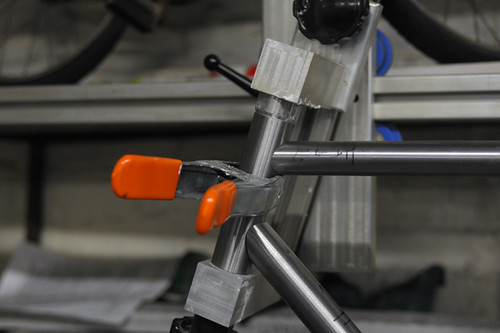
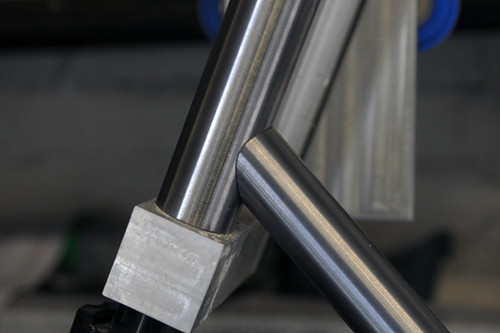
Think about it: When we get a tube, its edge is cut straight across. But if we want that edge to join the rounded surface of another tube, weneed to sort of scoop out the center of that opening, to scallop it. This is what's called notching - also known as mitering or coping.


Tube Notching

And because the tubes join at an angle that is almost never 90°, the notch must be done asymmetrically, to fit the precise angle. In theory, I understood the concept, but in practice I had a hard time imagining concretely how this was to be done. How were builders able to determine the shape of the scalloped edge with such precision and draw it on the edge of the tube? Too embarrassed to ask this question, I tried to read up on it. Unfortunately, the more I read, the more confused I got.


Tube Notching

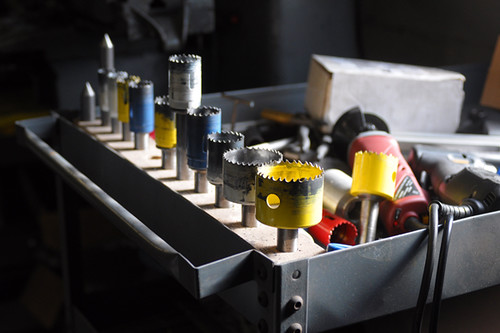
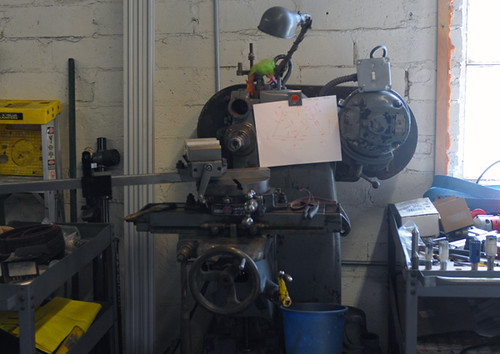
But the mystery was cleared up in a matter of seconds once it was time to notch my own tubes. Mike has what's called a horizontal milling machine, which can be fitted with all sorts of tooling - including hole saws of various diameters.


Tube Notching

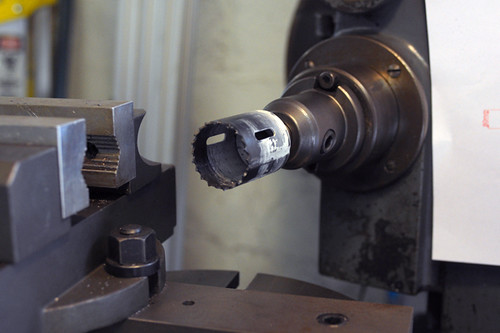
A hole saw is literally a round saw that makes holes in things. They are available in a variety of diameters. You choose the saw that matches the diameter of the dominant tube - the one to which you will be joining the tube you want notched.


Tube Notching

After attaching the correct saw and installing the to-be-notched tube in the clamp, you then set the angle of the joint, according to your bicycle frame's geometry.


Tube Notching

And that's it. As you turn the crank, the hole saw makes its way through the edge of the tube and notches it. Basically the saw forces the shape of the dominant tube through at the correct angle. Watching this happening I experienced a sudden flash of understanding and it was immensely satisfying.


Of course, by far not everyone who builds bicycle frames has this type of machine handy, and the low-tech notching method involves using lugs to make guide marks, then a hacksaw to make the cut.But even if I never have access to such machines again, operating them has done me more good than I can express.


Tube Notching

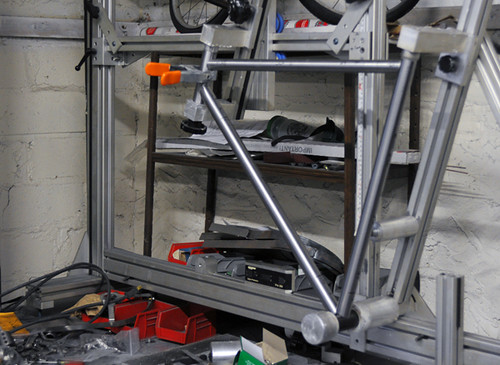
I love the clean look of a notched frame; the way everything fits together perfectly and makes total visual sense before you get it all filthy with flux and leaky brazing marks. But also, watching the tubes fit and actually getting how and why they fit is wonderful.My head is bursting with the sudden understanding of concepts I've previously struggled with, and that is an exciting feeling to have. Whether it's framebuilding or any other subject-matter, it is never too late to learn new things.

Tuesday, August 11, 2009

Ingalls Lake and Ingalls Peak


A big group ready to hit the trail to Ingalls Lake and the South Summit of Ingalls Peak.


Ingalls Lake on a beautiful fall day.


Dave, Pete and Jim on the South Summit. Mt. Stuart in the background.


Saturday, August 1, 2009

Veggie dinner

It won't stop raining. Our garden is a mess.

So we shopped the local the farmer's market.


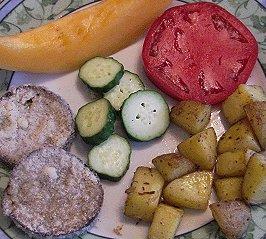
We had one sad little tomato from our garden. It was only partially pink, and had a mushy spot on one side and a brown spot on the other. What leaves the bugs and rabbits had left were wilting and turning yellow. (I guess I should have sprayed. It was an heirloom tomato, not resistant to much of anything.) It tasted wonderful, though.

The tomatoes in this picture looked wonderful on the back of that pickup at the farmer's market, but ended up a big disappointment. They were ripe red and beautiful, but just like grocery store tomatoes, had no taste. Next time I'm buying the ugliest ones I see.

Everything else was good though.

Young Yukon Gold potatoes, mmm. Cut up, mixed with a little olive oil and herbs, then roasted at 350°F (177°C) for about 45 minutes. I used McCormick's Italian Herb Seasoning Grinder because I was in a rush. But just plain thyme or rosemary with a little salt and pepper is good too. (Stir 3 or 4 times during cooking.)

Eggplants, mmm. I like the smaller ones. Slice and marinate in Italian dressing for about 30 minutes. (I like Newman's. All his stuff is great and is made with fresh ingredients.) Then coat with a mixture of corn meal, parmesan cheese, and salt & pepper. Bake at 350°F (177°C) until browned on top. (This will vary depending on how thick your slices are. But in general it takes 15 - 20 minutes.) Normally I like real shredded parmesan cheese instead of the powdery stuff in a can, but the powdery stuff actually mixes better with the corn meal.

Major new route on the North Face of Hunter!

http://moonflower-expedition.blogspot.com/


Congrads to Matt Helliker and JonBracey!


Picture of the route is courtesyof Helliker's web site.