Tuesday, April 30, 2013

Tombstone Tuesday :: Parkison Family

The Parkison plot in the Masonic Section, Greenhill Cemetery, Columbia City, Indiana. The large stone in the center is for George and Sarah Parkison. On the left is the marker for one of their sons, Benjamin F. Parkison.

Sarah Foster Parkison is my 3rd great grandmother. Born on May 14, 1818 in Perry County, Ohio she was the daughter of Benjamin Foster and Margaret "Peggy" Myers. Sarah's brother, Eli, was born December 28, 1819. I don't know for sure when their mother died, but on September 27, 1821 their father married Peggy's sister, Anna Maria "Mary" Myers. Benjamin and Mary Foster had eleven children between the years 1822 and 1843.

On November 20, 1843 Sarah Foster gave birth to a son, William Brubaker, who became my 2nd great grandfather. Born out of wedlock, his father was John Brubaker. On March 28, 1849 Sarah was married to George Thomas Parkison and two years later they moved to Thorncreek Township in Whitley County, Indiana. At that time the family consisted of William and his half-brother Jacob Henry Parkison. (William and Jacob would later marry sisters, Malissa and Roxie Joslin.) Sarah and George would have three more children, all born in Whitley County: Mary E. Parkison, Benjamin Foster Parkison, and George Washington Parkison.

GEORGE T. PARKISON / DIED JUNE 27, 1902 / AGED 81 Y. 10 M. 15 D. / SARAH - WIFE OF G. T. PARKISON / DIED APR. 24, 1904 / AGED 85 Y. 11 M. 10 D.

BENJAMIN F. / Son of / G. T. & S. PARKISON / DIED / Apr. 27, 1873. / AGED 19 Ys. 11 M. 15 D.

All Photographs taken October 20, .. by Rebeckah R. Wiseman.

Phend-Fisher Family Reunion Ledger - 1911 & 1912

The 3rd reunion of the Phend - Fisher families met at Frank Wehrleys on June 24 - 1911
The A. M. was spent in a social way.
At noon a basket dinner was served under a tent, on the lawn.
There were about 45 present.
In the afternoon songs were sung and a prayer rendered by Rev. Spangler of the Evengelical church at Elkhart.
A talk by Wm Phend.
Other songs.
Remarks by Rev. Spangler then a storm prevented further pleasures.
It was decided to meet at Jacob Phends near Elkhart on June 29 - 1912.
Adjournment.
Mrs. F. A. Wehrly, Secretary.= + = + = + = + = + =
There is no record of a family gathering in 1912.
= + = + = + = + = + = The Phend-Fisher families gathered for a reunion in Elkhart County, Indiana almost annually from 1909 until 1943. Usually held at Nappanee, the events of the day were recorded in an old ledger book, now in my possession. Sadly, the fragile pages have turned brown, separated from the binding, and are, in effect, disintegrating. Some years more information was recorded than in others, but, for me, these pages provide a glimpse into the past. Spelling has been retained as it was in the original though some punctuation and paragraph breaks have been added. To view all articles in this series click on the "Phend-Fisher Reunion Ledger" label at the bottom of this post.

Sunday, April 28, 2013

Abstract Ice


So far in this early winter season we have not had cold enough temperatures for much ice to form, at least not for very long. A recent warm spell combined with rain quickly did away with what little ice and snow we had along the Lake Superior shoreline. So, I'm digging through my archives looking for ice shots, since I have "ice on the brain". This one is a shot of a small Lake Superior wave pool along the Hollow Rock shoreline, taken in January of 2007. It is one of the coolest patterns of ice that I've ever seen. The true scale (in terms of surface area) of this ice was roughly two feet by three feet. I was blown away when I discovered this unique feature. I visited the same site a few days later and the pattern in the ice was completely different. Look for that one to be posted soon :-)

Jemez Red Rocks


Friday, April 26, 2013

Exit ..

Followed up an excellent day of climbing in Darrington with a not-so-excellent day at Exit 38.

Started the day at Interstate with the intention of finally checking out Off Ramp. Before climbing, we figured out the approach to Off Ramp, but noticed it did not have anchors assessable for top roping. So I decided to warm up on Eating Dust as the stump no longer exists and makes Eating Rocks a bit more difficult start than it was previously. I had no issues on the climb and set up a top rope for Steen to climb. She climbed Eating Dust and then we both climbed Eating Rocks. I brought her to the top so I could finish off with Insomniac, but I balked after clipping the first bolt and could not seem to figure out the moves. My calves were noticeably sore from the previous day and after about four attempts, we decided to rap down.

On the ground we were met by Adam, Zach and his girlfriend. They were going to climb in that area while Steen and I checked out something different. We walked over to Kiss of the Crowbar a nice 5.7 route that I had climbed a few years ago with Lindsay. I started up and found it to be runout and couldn't even locate the second bolt so I went left to climb Attack of the Butter Knives before seeing the second bolt. I then made a traverse back to clip the correct bolt and then back tracked to unclip from the off route bolt.

I was then able to proceed upward. However I was still balking. Steen asked if I wanted to come down, but I told her I was going to go for it. As I clipped the third bolt I realized it suffered from the same problem the second bolt suffered from. The bolt was poorly placed and caused the carabiner on my draw to come to rest on the rock's edge. This concerned me as I was afraid of the biner breaking in a fall. The wind was blowing and I did not feel comfortable climbing upward from that point. But I noticed there might be a bypass around the next steep section by going around it to the right. I informed Steen of what I was about to do and went around to the right. After going around and up, I was a bit above the previous bolt and did not feel comfortable trying to get back on route. I then informed Steen of my decision to attempt to walk off to the right. There was a grassy ledge system with some small shrubs that I was able to traverse until I got to walking terrain. I called "off belay" and untied to walk down to Steen.

I apologized for the lack of my finishing and told her to pull the rope and told her I hoped Adam would be able to complete the route to get my gear. It was Noon, and we decided after telling the others that we would sit in the sun on the talus field and enjoy lunch. It was shady and cold near the base of the wall, and not much better on the route, so the less windy and more sunny talus slope provided a welcome change.

Adam two clips up on "...Crowbar"

After lunch Zach and his girlfriend left to go for a hike while I belayed Adam up Kiss of the Crowbar. He tried to rectify the same issue I was concerned with and did it with adding an additional biner on the bolt. He made his way surely to the top and set up a top rope for Steen and I to climb. While Steen was halfway up a guy came by that was an acquaintance who was hoping to get on the route. I told him I would skip the top rope and he could have it after Steen. Adam instructed me to head to Squishy Bell to see if I could set up a top rope there. I hiked up to Squishy Bell where there was already two parties on routes (which left only one anchor open.) Instead of being the person who holds movie theater seats when others are not in the theater, I dropped the rope and my jacket at the base and went back to pick up my pack. After explaining the situation to Adam, I headed back to wait for him and Steen to join me.


Steen cleaning the anchor on "Crowbar" with McClellan Butte backdrop.

By the time they joined me, I had convinced myself that I would lead Winter Rushing In to set up a top rope for November Glaze. Thankfully, I had no issues leading the route and set up the top rope. Steen followed Winter Rushing In and then all three of us top roped November Glaze. Which is a fun route that has a difficult move to reach the second bolt. After that route, we packed up and headed home.

This was a frustrating day for me as I climbed well the previous day but had some head issues attempting to lead today. Interestingly, I did not have those issues on the final lead, so I am not sure what happened. I guess some times you have off days, or off climbs. I'm going to put it behind me and look forward to the next climb.

One of the “Family Tree Magazine 40 Best”

This post is coming to you from “the lodge” at Chisos Basin in Big Bend National Park, courtesy of their free (Really. Really. Slow.) Wifi. The weather yesterday was absolutely gorgeous. Sunshine and blue skies and the temperature reached a high of 86 degrees, though it didn't feel that hot to me. Probably due to the nice breeze that was blowing all day long. Today, Mother Nature is not quite so kind. It is in the upper 20s and snowing! Fog rolled in during the night and the temperature plummeted. About 10:30 I made my way to the visitors center and joined about 25 other people milling about trying to decide what to do. The weather in the lower elevations isn't much better than it is here in the Chisos Basin.

I came to the lodge for a hot meal and found out that they have Wifi available! So I went back to the van and grabbed the netbook. But the battery is down to 15% with no outlet available so I don't have much time left... Upon checking my email I saw a note from Diane Haddad that mentioned that Family Tree Magazine had announced their selection of the 40 Best Genealogy Blogs. And Kinexxions made the list!!

It is indeed an honor to be among the other blogs included in the list. Thank you to Family Tree Magazine and especially to everyone who voted for kinexxions. In some respect I feel like an impostor. Blogging and Genealogy in particular, have taken a backseat to travel. Family History posts have recently been few and far between. That doesn't mean there aren't stories to be written or research yet to be done. Far from it. But at this point in time, they aren't a real high priority for me.

I am proud to be a member of the genealogy blogging “geneablogger” community. There are many, many blogs being written by some very creative and talented writers. This community is a group of people who are extremely generous with their research stories, tips, advice, and support for one another. And the community is growing – each new blogger adds something to the whole, making it better than it was before. I look forward to watching it grow.

Thank you and Congratulations to all of the other blogs that made the Family Tree Magazine Fab Forty!

Tuesday, April 23, 2013

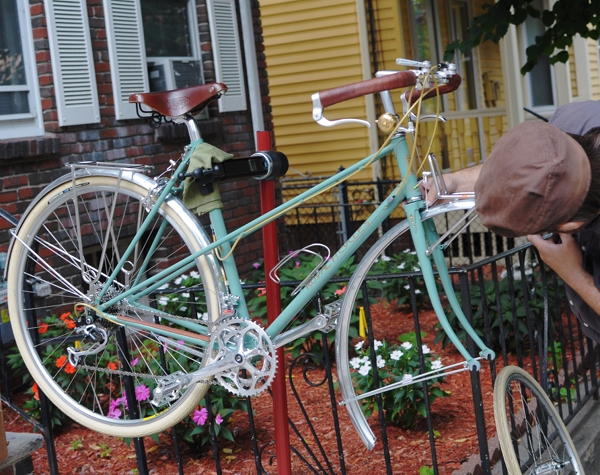
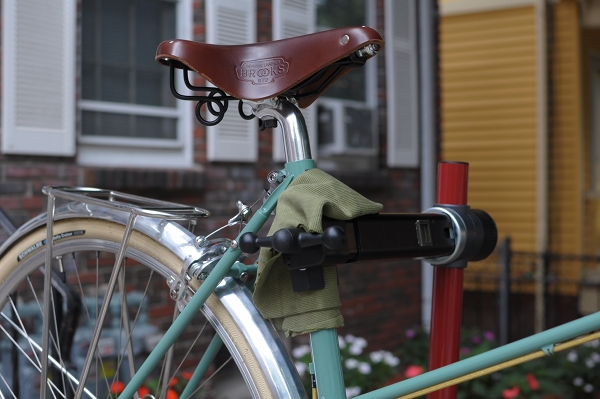
Hard Core Bicycle DIY: Is It Worth It?

Over his year and a half of adult bicycle ownership, the Co-Habitant has progressed from not knowing much about bicycles at all, to completing two full bicycle builds from scratch. In the course of that time, knowledge was gradually gained, tools were purchased one by one, and increasingly complicated procedures were mastered. I helped when I could, but mainly the mechanics are his thing. I will stick to writing about it, thank you.


It certainly would be nice to write an inspiring post about what a rewarding and empowering experience it is to do one's own bicycle builds and overhauls. But the truth is, that I do not necessarily believe that to be so - which is why I do not do it myself. Assuming that we are speaking ofserious DIY here, beyond simple maintenance, these projectsrequire the investment of considerable amounts of time, energy and money.At the risk of coming across as discouraging, here is how I see it:

It is worth doing your own bicycle mechanics if...

...You truly enjoy it and look upon it as a hobby to fill your spare time with. That is the #1 reason in my view. If you do not enjoy it, the process can be extremely frustrating. Also, keep in mind that like any hobby, this one will require spending money on supplies - some of which will be wasted on trial and error. You will surely ruin cables and cable housing, possibly even components. You will order the wrong parts and will need to return them. Sometimes you will only realise that they are the wrong parts after you try to install them and scratch them up - making returns or exchanges impossible. You will have to make multiple, unexpected trips to bicycle shops and hardware stores for things you will suddenly realise you need. All this better be enjoyable, or it makes no sense.

...You own multiple bicycles, plan to build up multiple bicycles, and/or foresee yourself frequently changing components on your bicycle(s). Only then does it make financial sense to invest in the many tools you will need to do your own overhauls and builds - and to go through the learning process before you actually get good at it. Things like a proper bike stand and a standard tool kit will already cost more than most bicycle shops charge for a bike build. And then there are the less common, but often necessary tools, such as headset presses, cotter presses, bottom bracket tools,dremels, and so on, that raise the cost of DIY even higher, if you properly account for it all.

...You are good at bicycle mechanics. If not, then it is just plain dangerous to work on your own bicycle. While some mistakes make for good learning experiences, others - especially when it comes to brakes, steering and the drivetrain - can have disastrous consequences.

...You are, at least to some degree, a control freak and like everything about your bicycle to be "just so". Sure, a bike shop may do an all right job. But you would just feel better if you trued those wheels or tensioned that chain or installed that bottom bracket yourself.

Ifall of the aboveapply, then by all means - full speed ahead with the DIY. You will enjoy it, and it will be rewarding. However,if your primary goal is to save money, I would suggest you think twice. It is not just about buying all the necessary tools that you may seldom have occasion to use again, but also about time. While on the surface it may seem that I would save money by doing abicycle build myself, in economic terms this is actually untrue. In the time it would take me to build up a bicycle, I could insteadtake on an extra freelance project in my own line of work - and the income from it would be greater than the money I'd save by building the bike myself. Financially speaking, the wise thing to do would be to allocate that work to an experienced mechanic while using the time saved to earn money in my own field of expertise.

I am fortunate to live with someone who enjoys working on bicycles (see his description of his travel tool kit!) and is quite good at it. I am also fortunate that he had some time off this summer and actually wanted to spend it working on bikes. Now that he has accumulated all the tools he needs and sufficient experience, we can do pretty much anything bicycle-related at home - and I appreciate that very much. But I by no means think that it is every "real cyclist's" duty to be able to do these things on their own, just like I do not think it is every "real home owner's" duty to be able to do their own plumbing and electrical work. If you are passionate about bicycle mechanics and are good at it, then certainly it can be fun and rewarding. Otherwise, it is best left to the experts - for the sake of your nerves and your wallet.

Saturday, April 20, 2013

838 State Street

I don't know exactly what year my grandmother and her family moved to Traverse City, Michigan but they were living there in 1909 and 1910. At some point they moved to a small house at 838 State Street – the 1910 census shows the family residing on State Street. Grandma recalled those days in Traverse City fondly when she wrote her autobiography. They were there only a few years when the family had to return to Indiana in December 1910, due to the death of her father's brother, Hale Brubaker.


Written on the reverse side of this photo, taken about 1950, is “This is the house we lived in – Traverse City, Mich. 40 years later.” The lady standing in front of the house is my grandmother, Hazlette Brubaker Phend.


This week I had the opportunity to pay a brief visit to the house...


The house at 838 State Street as it appeared on July 27, ... The perspective isn't exactly the same but it appears to be the same house as in the previous photo. The front porch has been removed and the roof has been extended over the side porch. And the trees have gotten bigger. And there are more houses in the neighborhood.


The side view.


The red “A” marks the location of 838 State Street, Traverse City, Michigan.


The big purple blob on the right marks the location of Traverse City State Park where I spent the night. The little blue blob is at 838 State Street. I was at a McDonald's on the corner of Front and Hope Street (a block west and north of 838 State Street) when I learned exactly where the house was located!


Once you get off the main road (U.S. 31 aka Front Street) Traverse City is a pretty quiet place. A nice “little town” that I'm sure my grandmother would no longer recognize.


Red Rose


Friday, April 19, 2013

Northern Hawk Owl


For the past couple of weeks a Northern Hawk Owl has been hanging around near the Grand Portage Trading Post. I have seen him several times, but until today he was always perched on the power lines (not the best for photos!). Today I spotted him in the trees and promptly reached for my 100-400mm lens. I watched him (or her? I'm not sure how to tell the difference in owls) for close to half an hour. During that time the owl flew to 4 or 5 different trees, and from each tree was listening for sounds of mice down under the snow. Every now and then he would swoop down towards the ground, but he never did catch anything while I was there. He sure gave me some nice opportunities for photos today though!


Thursday, April 18, 2013

Summit Trips and Road Access

Winter-like snowfall continues on Mt. Rainier, but you can feel the presence of spring and the coming summer in the air. Many climbers are planning summer trips; reservations are in full swing, and the guide services are working again on the mountain.

The best Mt. Rainier climbing news, of late, is the recent summit by two independent climbers. Tim Ryan (photo credit) and his partner (Erik) hiked in from the Nisqually Entrance (i.e. park boundary) up the Tahoma Creek drainage and to the summit via the Tahoma Glacier. Their trip report is here (almost verbatim).

Of interest to many is the updated list of road openings; there are no major surprises. Along those lines, the Nisqually to Paradise road is nearing completion. Park crews have reconstructed the embankments at Milespost's #5 and #9. In the next few weeks, the road crew hopes to complete the installation of two massive 12-foot culverts at Kautz Creek. They're still calling for a May 1 opening (barring unanticipated delays) and plan a "media day" once the major repairs are completed (just in case there wasn't enough press already).

A quick word on campgrounds... Cougar Rock Campground will be open May 18th, one week earlier, to help offset the loss of Sunshine Point. Otherwise, it's business as usual at the other locations (except for Ipsut Creek).

Monday, April 15, 2013

Wisconsin Dells Fifty Years Ago


Postcards. On the left is "Swallows' Nests, Wisconsin Dells. In the summer hundreds of swallows make their homes in holes in the sandstone cliff." And, at right is "Motor Launch on the Wisconsin River."

In a previous post I mentioned that my grandpa Vic and Aunt Shirley Phend had taken my brothers and me on a trip to the Wisconsin Dells. That was fifty years ago this week and it made the "gossip" column of the local newspaper! I'm not sure why they decided to take us along, Mom says they asked us to go simply because they thought we would enjoy the trip. We did, though now the details are a bit fuzzy. I think we were the only ones they ever took on a trip with them. I wonder if we were that ornery that they were put off doing it again? Mom did say that grandpa told her that he had to threaten us a few times to settle us down but that overall 'we were pretty good kids' so maybe they just never took another trip together. I do remember that us kids usually got along well, especially Jack and me, and that Doug was the instigator of many of the things that got us in trouble over the years. Of course, I would never start anything ;-)

In July 1957, Jack was the youngest and would turn 8 years old on the 8th of July. Doug had turned 10 in March, and I was 9 years old.

As with many of my later trips, I kept a record, sort of, of the towns we passed through. I just love the spelling of some of them. . .


The postcard below was written to my aunt Pat, one of Mom's sisters, but was apparently never mailed. That's not my signature, my Mother wrote my name in later. It says: "Dear Pat,We got to wisconson at 6:30. We went threw 31 towns. It took us 9 and a half hours to get there. It took us 350 miles to get there. How are all of you. I am fine. We went sight seeing and we went on a boat ride and we saw some Indinas."
My sister was only three years old at the time, so she didn't get to go along. This card was sent to her: "Dear Terry, I am fine. How are you. We are going to see some Indians tomorrow and we are going to take a boat ride.From Becky and Jacky.

Sunday, April 14, 2013

Systems?

I have been thinking about this subject since last last winter when I was first able to get back out on some Canadian ice.


Conversations over the week at OR just reminded of of the subject and encouraged me to finally put this one out there. OR is if nothing else the ultimate gear head meeting in North America. There are bigger shows but not on this side of the pond.


The comment I hear again and again is "how easy" the newest gear makes life in the mountains.


I agree 100%.


My story? I am climbing harder in the mountains now while being older with less skill, being less fit and with less courage than I was 30 years ago. How is that really possible?


First one that we forget is climate change. It is in fact warmer every winter. So for much of the climbing I do the conditions are a lot warmer. That is a big one we often over look. I am not sure the "systems" I use now would work as well if the conditions averaged were another 15 degrees colder.


None the less all of "us" are finding what we climb in for clothing today really has made climbing in general much, much easier. The first rule of thumb is "stay dry to stay warm".


I'll start from the ground up and describe what I am using in typical winter conditions, in mid February on the north side of the Midi in Chamonix to Andromeda in the Canadian Ice fields.


I am using a very light weight, lightly insulated boots given the chance. Fit is always a personal issue but so are the technical features such as crampon fit, mid sole flex, warmth, foot, ankle, calf support.


30 years ago if some one had told me I would be using a "soft" ice climbing boot on vertical ice in the future I would have laughed at them.


Yet the boot pictured above, the Scarpa Phantom Ultra, if given a choice is the boot I prefer to climb in today. And while the boot pictured above is my size, I out weigh the user in this photo by 30#. So in actual use I get an even softer flexing boot. It makes them easier to walk in. But given a slight change in climbing styles it also makes them a much more versatile and generally easier boot to climb in on technical ground for me.


Mind you I don't want a boot that is any softer or less supportive! But this one (boot styles and technology) surprised me in many ways.


The Phantom Ultra is by the manufactures description, "is the lightest of the next generation of the Phantom series. The new uppers are a made with combination of materials designed to save weight yet provide enough insulation and weather protection for Scottish winter climbing and summer alpinism."


Please be patient with me for a bit here as I relate all this back to the topic of "systems".


A softer flexing boot allows your feet to stay warmer because it is moving and flexing more naturally. Given enough insulation from the ground to combat the cold temps and enough protection above the sole to keep moisture out you can have warm feet if your feet stay DRY and have good circulation in a similar boot. Think of the old Army Mickey Mouse cold weather boot compared to a Spantik for flexibility.


Mind you I don't want to stand around in -30 temps in a pair of Ultras but I have. And amazingly I stayed warm enough.


I believe (after all this is just theory on my part) that the Ultra stays drier inside during use than the older generation Batura or its big brother the Phantom Guide, because it lacks insulation and breaths better. Your feet (at least mine do) sweat a lot. Getting rid of that moisture is a priority.


Such a priority even the difference of using a pant gaiter over the boot instead of putting the pant into the boot gaiter is important to staying dry and keeping your feet dry. And of course what the boot gaiter is made of and its ability to pass moisture is also equally as important.


Systems? Light weight four way stretch materials that are both water proof or water repellent make a huge difference in pants. The differing layers that can be worn under the "outer shell" or just as likely, now bonded to the outer shell are almost unlimited.


I have gone from 3 pairs of medium to heavy socks in my mtn boots to two pairs of really light layers. The same thing has happened on my lower body. I am down to a pair of long johns and a outer layer pant for the most part. But I can see a time (and have used prototypes) that mean only a pair of half johns or boxer shorts and the outer layer....insulation included. All the stripping of additional layers means more *comfort* and freedom with every step and climbing movement. And with the current stretch materials added less effort involved.


These days, water proof, breathable (really breathable), 4 way stretch, durable and super light weight is not only possible but could be common place if you know where and what to look for. Having seen some of this already I am getting even more curious as to what is available and even more demanding of my own choices.


Sad but true, if you are climbing in gear that is even 10 years old, and more likely even five years old, you are wasting energy. That is a fact. As much as I don't like a market driven economy in climbing..especially alpine climbing.... these changes are here to stay and the changes are making our goals in the mountains (or just outdoors) easier to obtain.


From easier to prepare and carry food to lighter weight, more flexible and more durable clothing things are changing for the better...rapidly.


On the upper body I have gone from several layers to 3 as a system. The garments used may change depending on the temperatures expected but it is the same system. I am hoping to hear from some of the more active outdoor designers themselves about the systems they are using. I don't even see everything that is available in materials let alone get to test all of what is available out doors. The OR show just drives that home to me with every edition. More feed back from some of the guys at the "cutting edge" is really exciting for me.


It is really fun to still be involved at a time when every piece of kit from crampons, harness, tools, boots, gloves, clothing through to helmets are changing radically in such a short time.


The newest helmets are 165g...a 1980's state of the art helmet 648g


A Nomic is 600g and 1980's Clog 875g


Clothing has gotten warmer, drier and much, much lighter across the board in everything from socks to gloves......while adding full four way stretch.


Cold weather, technical boots and crampons combos are still stuck at the magic 1350g (3# for a size 45) after a full 30 years of "development"!


There is always more to come!

Friday, April 12, 2013

Cancel the Luau, Winter is Back!

As we approach the month of Juneuary here on Mt. Rainier our weather has done a 180. Monday was sunnywith great corn skiing on the Muir Snowfield, now we are looking at breaking out the powder skis again!


Yesterday, NOAA published a Special Weather Statement reguarding this front moving down from the Yukon. Snow is expected Wednesday thru Friday. So far we have 14" of new snow is on the ground!

Today, 5/23/13 rangers in Paradise woke up to another7" of fresh snow and no sign of it letting up soon. If your a powder hound you will be stoked! If you are traveling to Paradise, Chainsor 4x4 have been required for the past two days.


On the climbing front, this storm system has provided a reset for the mountain. Last week was bluebird andclimbing felt likeJuly. This weekclimbers should be prepared for winter conditions and the subsequent avalanche hazard from heavy snow fall and wind loading.


Further, crevasses are going to be a increasing hazard. The recent warm spell produced significant melt on the mountain with NPS natural resources speculating that 2 meters of snow was lost. Lots of craks have started to open up and combined with this recent snow the possibility for thinly covered and wind-liped crevasses is very high. Be sure to travel in rope teams anywhere on a glacier.


The Climbing Rangers are still on the Mountain and Rainier is open for business. Come up and enjoy the weather.

Sadness

On an incredibly somber note, the Seattle climbing community and Mount Rainier climbing program were rocked this week with the loss of a very close friend. While warming up for larger climbs in the Alaska Range, our friend fell to her death descending Mount Wake. At this time, we're withholding many of details until her husband can be notified. The press has picked up on the accident, as have many of the chat rooms (ST, CC); all are honoring the request for privacy until proper notification can be made. I'll post more information about the incident and this incredible person when the time is right. Here is picture of Mt. Wake provided by Mark Westman.

Tuesday, April 9, 2013

After the Fire


This is how it looks now after a fire was stopped right here at this road through the mountains about 3 years ago. Some aspen seedlings are starting to grow and a few wildflowers but still lots of dead trees. Standing dead trees, commonly called 'widow makers' can be dangerious to walk near as you never know when one is apt to fall down. This fire had come across the top of a ridge and down into a rocky area that helped stop it as well as little rain.

Mountain Dandies


A lot of the mountain meadows were covered with dandelion flowers. Carpets of bright yellow. I don't think these dandies are native to the mountain but sure are pretty when blooming. The wild goose berries were blooming, too. Tiny little orange blossoms that will make a berry favored by birds, and other wildlife. We saw a bird nest in one blue spruce near a small creek. The open seed cones of pinon pine trees, New Mexico's pine tree, and aspen trees that had their back rubbed by the deer and elk last fall when they were rubbing the velvet off of their antlers. The deer and elk damage the aspens when they do this leaving unique designs in the white bark that are black. Some people carve on the aspens but shouldn't do it and I hate to see it.